

 July 17, 2026
 Cybersecurity, IT
 able of Contents
- Introduction
- What Is Data Protection Awareness?
- Why Technology Alone Isn’t Enough
- Common Workplace Data Protection Mistakes
- Sending Emails to the Wrong Person
- Weak Password Practices
- Ignoring Software Updates
- Using Public Wi-Fi Without Protection
- Oversharing Information
- Recognizing Social Engineering
- Phishing Emails
- Phone Scams
- Tailgating
- Creating a Data Protection Culture
- Best Practices Every Employee Should Follow
- Protect Passwords
- Lock Devices
- Handle Sensitive Information Carefully
- Verify Before You Trust
- Report Problems Immediately
- Why Every Department Plays a Role
- Human Resources
- Finance
- Sales and Marketing
- Operations
- Leadership
- The Business Benefits of Employee Awareness
- Fewer Security Incidents
- Greater Customer Trust
- Stronger Compliance
- Improved Business Reputation
- Looking Ahead
- Practical Takeaways
- Related AOS Learning Pathways
- Internal Link Suggestions
- Suggested External References
- Conclusion
- Continue Your Learning Journey
Introduction
When organizations think about protecting their data, they often focus on technology. Firewalls are installed, antivirus software is updated, and security systems are strengthened to defend against cyber threats.
While these tools are essential, they don’t tell the whole story.
One accidental click on a malicious email, one weak password, or one confidential document sent to the wrong recipient can bypass even the most advanced security systems.
This is why cybersecurity professionals often say that people are both the greatest vulnerability and the greatest defense in information security.
Data protection isn’t just an IT responsibility. It’s a shared responsibility that involves every employee, contractor, and leader within an organization. Building a culture where everyone understands how to handle information responsibly can dramatically reduce the risk of security incidents.
What Is Data Protection Awareness?
Data protection awareness refers to an individual’s understanding of how to handle sensitive information securely and responsibly.
It includes knowing:
- What information should be protected
- Why data protection matters
- Common security risks
- Safe workplace practices
- How to identify suspicious activity
- What to do when something goes wrong
Awareness empowers employees to make informed decisions that protect both the organization and its customers.
Why Technology Alone Isn’t Enough
Organizations invest heavily in cybersecurity technologies, yet many security incidents still begin with simple human mistakes.
Examples include:
- Clicking fraudulent links
- Using weak passwords
- Sharing confidential information unintentionally
- Falling victim to social engineering
- Leaving sensitive documents unattended
- Using unauthorized software or devices
Technology can reduce risk, but informed people often prevent incidents before technology even becomes necessary.
Common Workplace Data Protection Mistakes
Understanding everyday mistakes helps organizations prevent them.
Sending Emails to the Wrong Person
Email remains one of the most common communication tools in business.
A simple mistake in the recipient field can expose confidential information to unintended individuals.
Always double-check recipients before sending sensitive information.
Weak Password Practices
Employees sometimes:
- Reuse passwords across multiple accounts
- Share passwords with colleagues
- Write passwords on sticky notes
- Choose passwords that are easy to guess
Strong password habits significantly improve organizational security.
Ignoring Software Updates
Security updates often fix vulnerabilities that attackers actively exploit.
Delaying updates creates unnecessary risks for both individuals and organizations.
Using Public Wi-Fi Without Protection
Working remotely has become increasingly common.
Connecting to unsecured public Wi-Fi without appropriate safeguards may expose sensitive information to interception.
Whenever possible, use secure networks and approved remote access solutions.
Oversharing Information
Employees may unknowingly reveal valuable business information through:
- Social media posts
- Public conversations
- Online forums
- Video calls conducted in public places
Even seemingly harmless details can help cybercriminals build more convincing attacks.
Recognizing Social Engineering
Not every cyberattack involves sophisticated hacking techniques.
Many attackers simply manipulate people into revealing information.
Common social engineering tactics include:
Phishing Emails
Messages designed to appear legitimate while encouraging recipients to:
- Click malicious links
- Download infected files
- Reveal passwords
- Approve fraudulent payments
Phone Scams
Attackers may impersonate:
- IT support
- Bank representatives
- Company executives
- Government agencies
They often create urgency to pressure victims into making quick decisions.
Tailgating
Someone without authorization follows an employee into a secure building without proper identification.
Physical security remains an important part of protecting information.
Creating a Data Protection Culture
Security awareness should become part of an organization’s everyday culture rather than an occasional training session.
Leaders can encourage this by:
- Discussing cybersecurity regularly
- Rewarding good security practices
- Making it easy to report concerns
- Providing ongoing education
- Leading by example
When employees see leaders taking data protection seriously, they are more likely to do the same.
Best Practices Every Employee Should Follow
Regardless of job role, everyone can contribute to protecting information.
Protect Passwords
- Create unique passwords.
- Use password managers where appropriate.
- Enable Multi-Factor Authentication (MFA).
Lock Devices
Never leave computers or mobile devices unlocked in public or shared environments.
Handle Sensitive Information Carefully
Only access information necessary for your responsibilities.
Store and share confidential data using approved organizational procedures.
Verify Before You Trust
If an unexpected request involves:
- Money
- Passwords
- Customer information
- Confidential documents
Always verify the request through another trusted communication channel.
Report Problems Immediately
Early reporting allows organizations to respond quickly and minimize potential damage.
Employees should never hesitate to report:
- Suspicious emails
- Lost devices
- Unexpected system behavior
- Accidental data exposure
Why Every Department Plays a Role
Data protection isn’t limited to IT teams.
Every department handles valuable information.
Human Resources
Protect employee records and payroll information.
Finance
Safeguard banking details and financial transactions.
Sales and Marketing
Handle customer information responsibly.
Operations
Secure business processes and operational records.
Leadership
Promote accountability and invest in security awareness.
Protecting information is everyone’s responsibility.
The Business Benefits of Employee Awareness
Organizations that invest in data protection awareness often experience:
Fewer Security Incidents
Well-informed employees recognize threats before they become serious problems.
Greater Customer Trust
Customers are more confident when businesses demonstrate responsible information management.
Stronger Compliance
Awareness helps employees follow organizational policies and applicable legal requirements.
Improved Business Reputation
Organizations known for protecting information build stronger relationships with customers, partners, and stakeholders.
Looking Ahead
As businesses continue adopting:
- Artificial Intelligence
- Cloud computing
- Remote work
- Digital collaboration tools
Employees will face new information security challenges.
Continuous education will become one of the most valuable investments organizations can make.
Technology will continue to evolve—but informed people will remain at the heart of effective data protection.
Practical Takeaways
- Data protection is everyone’s responsibility.
- Human error remains one of the biggest causes of security incidents.
- Regular employee awareness training significantly reduces organizational risk.
- Strong passwords and Multi-Factor Authentication improve security.
- Employees should verify unexpected requests before taking action.
- Creating a culture of accountability strengthens long-term information security.
Related AOS Learning Pathways
Develop practical skills that help protect information and strengthen workplace security through these AOS learning opportunities:
- Data Protection Assistant
- Cyber Security Awareness Training
- Cyber Law
- RANSOMWARE UNCOVERED: Cybersecurity Essentials
- Digital Forensics for Cyber Professionals
These learning pathways provide professionals with the knowledge needed to recognize cyber risks, protect sensitive information, and contribute to a stronger security culture.
Internal Link Suggestions
- Why Every Business Needs a Data Protection Strategy in the Digital Age
- Data Breaches Explained: What They Are, Why They Happen, and How to Prevent Them
- Data Privacy vs. Data Protection: What’s the Difference?
- Understanding Cybercrime: The Most Common Online Crimes and How to Stay Protected
- AOS Learning Hub
Suggested External References
- National Institute of Standards and Technology (NIST)
- Cybersecurity and Infrastructure Security Agency (CISA)
- International Association of Privacy Professionals (IAPP)
- SANS Institute
- International Organization for Standardization (ISO)
Recommended Featured Image Alt Text
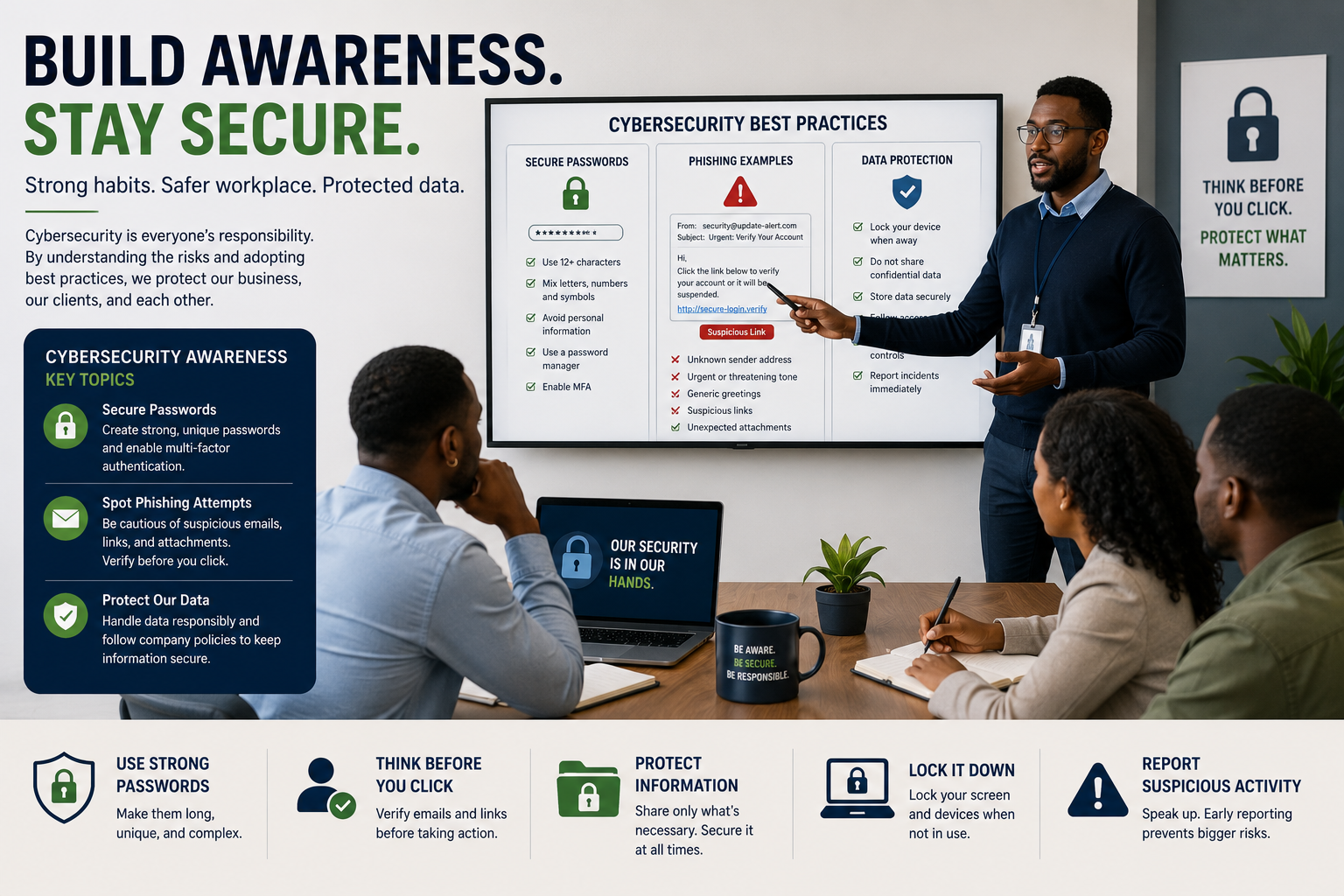
“Employees participating in a workplace cybersecurity awareness training session while reviewing secure password practices, phishing examples, and data protection guidelines.”
Conclusion
Technology is only one part of an effective data protection strategy. Behind every secure organization is a workforce that understands the importance of protecting information and knows how to respond to potential threats.
By investing in employee awareness, encouraging responsible information handling, and building a culture where security is everyone’s responsibility, organizations can reduce risks, strengthen customer trust, and improve long-term resilience.
In today’s digital workplace, informed employees are one of the most valuable assets an organization can have.
Continue Your Learning Journey
Organizations succeed when their people are equipped with the right knowledge. Explore the AOS Learning Hub to discover practical courses in Data Protection, Cybersecurity, Cyber Law, and Digital Forensics that will help you build the skills needed to protect information and support secure, responsible business operations.