

 July 16, 2026
 Cybersecurity, IT
 Table of Contents
- Introduction
- What Is Intellectual Property?
- What Is Digital Intellectual Property?
- Common Types of Intellectual Property
- Copyright
- Trademarks
- Patents
- Trade Secrets
- Does Posting Online Mean You Lose Ownership?
- Common Intellectual Property Mistakes
- Using Images Found Through Search Engines
- Copying Website Content
- Using Unlicensed Software
- Sharing Music Without Permission
- AI-Generated Content and Ownership
- Intellectual Property in the Workplace
- How to Protect Your Digital Content
- Keep Records
- Use Written Agreements
- Register Intellectual Property
- Monitor Unauthorized Use
- Respecting the Intellectual Property Rights of Others
- The Role of Cyber Law
- Emerging Challenges in Digital Intellectual Property
- Practical Takeaways
- Related AOS Learning Pathways
- Internal Link Suggestions
- Suggested External References
- Conclusion
- Continue Your Learning Journey
Introduction
Creating digital content has never been easier. With a smartphone and an internet connection, anyone can publish videos, write articles, design graphics, launch a podcast, or build an online business.
But there’s an important question many creators and businesses overlook:
Who actually owns digital content once it’s published online?
Many people assume that if something is available on the internet, it’s free to use. Others believe posting content on social media means they lose ownership altogether. Both assumptions can lead to costly mistakes.
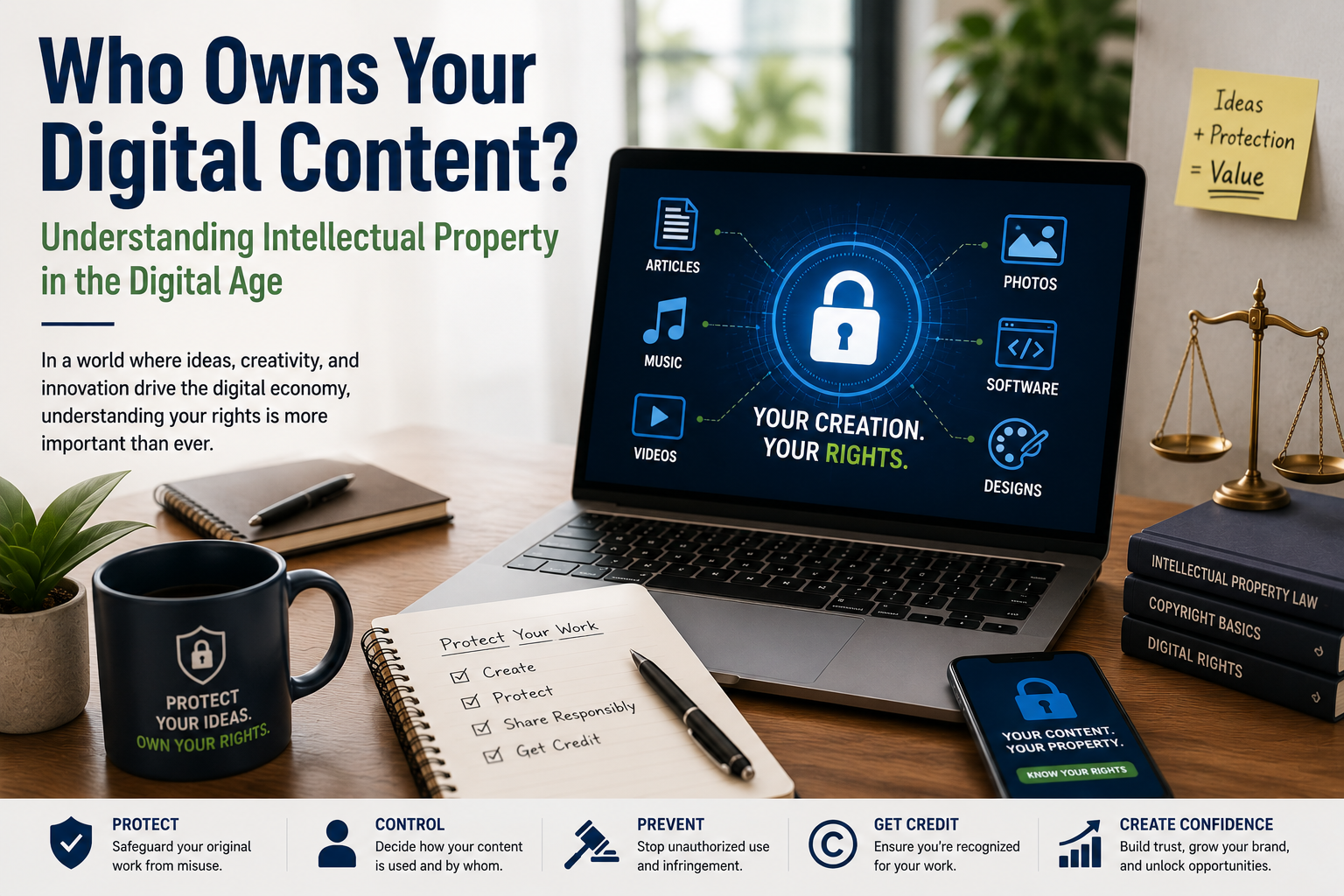
Whether you’re a content creator, entrepreneur, marketer, software developer, educator, or business owner, understanding digital intellectual property is essential. It helps protect your creative work, prevents legal disputes, and ensures you respect the rights of others.
In this guide, we’ll explore how Digital intellectual property applies in 2026, what rights creators have, and how businesses can safely create, share, and use online content.
What Is Intellectual Property?
Intellectual property (IP) refers to creations of the mind that have legal protection.
Unlike physical property, intellectual property protects ideas that have been expressed in a tangible form.
Examples include:
- Articles and blog posts
- Software applications
- Logos and branding
- Photographs
- Videos
- Music
- Online courses
- Books
- Graphic designs
- Business processes
- Digital artwork
These creations often represent significant time, skill, and financial investment, making their protection important for both individuals and organizations.
What Is Digital Intellectual Property?
Digital intellectual property applies these ownership rights to content created, stored, or distributed electronically.
Examples include:
- Website content
- Mobile applications
- Digital illustrations
- E-books
- Online videos
- Podcasts
- Social media content
- Computer code
- Digital templates
- AI-generated creative work
As digital economies continue to grow, protecting these assets has become a major concern for creators and businesses alike.
Common Types of Intellectual Property
Different forms of intellectual property protect different kinds of work.
Copyright
Copyright protects original creative works.
Examples include:
- Articles
- Books
- Music
- Films
- Photography
- Software code
- Educational materials
In many countries, copyright protection begins automatically once an original work is created and fixed in a tangible form.
Trademarks
A trademark protects brand identity.
Examples include:
- Company names
- Logos
- Product names
- Slogans
Strong trademarks help customers identify authentic products and services.
Patents
Patents protect inventions and new technological solutions.
Technology companies often rely on patents to safeguard innovative products and processes.
Trade Secrets
Some valuable business information is protected through confidentiality rather than registration.
Examples include:
- Manufacturing processes
- Algorithms
- Business strategies
- Customer lists
- Proprietary formulas
Organizations often use contracts and internal policies to protect trade secrets.
Does Posting Online Mean You Lose Ownership?
One of the biggest misconceptions about digital content is that publishing it online means giving up ownership.
Generally, creating and publishing original content does not automatically transfer ownership to the platform or the public.
However, when using online platforms, users often grant the platform certain permissions through its terms of service. These permissions allow the platform to host, display, or distribute content but do not necessarily transfer copyright ownership.
Because terms vary between platforms, creators should review the agreements that govern how their content may be used.
Common Intellectual Property Mistakes
Many businesses unintentionally expose themselves to legal risks.
Using Images Found Through Search Engines
Finding an image online does not automatically mean it’s free to use.
Always verify licensing before using photographs or graphics.
Copying Website Content
Duplicating articles, product descriptions, or educational materials without permission may infringe copyright.
Instead, create original content or obtain appropriate authorization.
Using Unlicensed Software
Installing unauthorized software may violate licensing agreements and expose organizations to cybersecurity risks.
Sharing Music Without Permission
Businesses frequently overlook licensing requirements when using music in advertisements, promotional videos, or events.
Assuming AI-Generated Content Has No Legal Considerations
Artificial intelligence is changing how content is created, but ownership and licensing issues continue to evolve.
Organizations should understand the terms governing AI-generated content and ensure it aligns with applicable laws and platform policies.
Intellectual Property in the Workplace
Ownership can become more complex when content is created during employment.
Questions that commonly arise include:
- Who owns software developed by employees?
- Who owns marketing materials?
- What happens to customer databases?
- Who controls designs created by contractors?
Clear employment agreements and contracts help reduce misunderstandings by defining ownership rights before work begins.
Protecting Your Digital Content
Protecting intellectual property involves more than registering rights.
It also requires practical management.
Keep Records
Maintain documentation showing:
- Creation dates
- Draft versions
- Design files
- Contracts
- Licenses
Good documentation can be valuable if ownership is ever disputed.
Use Written Agreements
Contracts should clearly define:
- Ownership
- Usage rights
- Licensing terms
- Confidentiality obligations
This is especially important when working with freelancers or external agencies.
Register Intellectual Property Where Appropriate
Depending on the jurisdiction and type of work, registration may provide additional legal protections.
Seek professional advice when appropriate.
Monitor Unauthorized Use
Regularly search for unauthorized copies of your content online.
Early detection often makes enforcement easier.
Respecting the Rights of Others
Protecting your own work also means respecting the work of others.
Before using third-party content, ask:
- Do I have permission?
- Is a license required?
- Is attribution necessary?
- Are there restrictions on commercial use?
Building a culture of respect for intellectual property reduces legal risks and supports innovation.
The Role of Cyber Law
Cyber law provides the legal framework for resolving many digital intellectual property disputes.
It helps define:
- Ownership rights
- Online infringement
- Digital evidence
- Licensing disputes
- Enforcement mechanisms
- Cross-border legal issues
As technology continues to evolve, cyber law plays an increasingly important role in protecting digital creativity and encouraging responsible innovation.
Emerging Challenges
Digital intellectual property continues to evolve.
Some of today’s biggest questions involve:
- Artificial Intelligence-generated content
- NFTs and digital assets
- Deepfakes
- Virtual reality content
- Cloud-based collaboration
- Cross-border copyright enforcement
Professionals who understand these developments will be better prepared for the future digital economy.
Practical Takeaways
- Original digital content often carries intellectual property protection.
- Publishing content online does not automatically eliminate ownership rights.
- Always verify licenses before using third-party materials.
- Written agreements help avoid ownership disputes.
- Businesses should develop clear intellectual property policies.
- Cyber law supports the protection and responsible use of digital content.
Related AOS Learning Pathways
Expand your understanding of digital governance and cybersecurity through these AOS learning opportunities:
- Cyber Law
- Data Protection Assistant
- Digital Forensics for Cyber Professionals
- Cyber Security Awareness Training
- RANSOMWARE UNCOVERED: Cybersecurity Essentials
These learning pathways help professionals understand the legal, ethical, and technical responsibilities of operating in today’s digital world.
Internal Link Suggestions
- Why Every Professional Should Understand Cyber Law
- Data Privacy vs. Data Protection: What’s the Difference?
- What Every Small Business Should Know About Cybersecurity Compliance
- AOS Learning Hub
Suggested External References
- World Intellectual Property Organization (WIPO)
- United States Copyright Office
- Creative Commons
- International Trademark Association (INTA)
- World Trade Organization (TRIPS Agreement)
Conclusion
As the digital economy continues to expand, intellectual property has become one of the most valuable assets individuals and organizations possess. Whether you’re writing code, producing videos, designing graphics, publishing educational content, or building a brand, understanding how ownership works online is essential for protecting your work and respecting the rights of others.
Digital innovation thrives when creativity is protected. By combining good business practices with an understanding of cyber law and intellectual property principles, professionals can confidently create, collaborate, and grow in the digital age while minimizing legal risks.
Continue Your Learning Journey
The intersection of technology, creativity, and law is becoming increasingly important across every industry. Explore the AOS Learning Hub to discover practical courses in Cyber Law, Data Protection, and Cybersecurity that will help you navigate today’s digital landscape with confidence and professionalism.