

 July 16, 2026
 Cybersecurity, IT
 Introduction Almost every interaction we have online involves sharing personal information. Whether you’re shopping online, registering for a webinar, applying for a job, or using a mobile banking app, you’re providing data that organizations collect, process, and store. But have you ever wondered what happens to that information after you click “Submit”? Many people use…
Table of Contents
- Introduction
- What Is Data Privacy?
- What Is Data Protection?
- Data Privacy vs. Data Protection: The Key Difference Why Both Matter Examples from Everyday Business:
- Online Shopping
- Healthcare
- Human Resources
- Common Data Privacy Mistakes
- Common Data Protection Mistakes
- Why Data Privacy and Protection Matter for Small Businesses
- Building a Privacy-First Culture Emerging Trends Practical Tips for Individuals
- Practical Takeaways Related AOS Learning Pathways
- Internal Link Suggestions
- Conclusion
- Continue Your Learning Journey
Introduction
Almost every interaction we have online involves sharing personal information. Whether you’re shopping online, registering for a webinar, applying for a job, or using a mobile banking app, you’re providing data that organizations collect, process, and store.
But have you ever wondered what happens to that information after you click “Submit”?
Many people use the terms data privacy and data protection interchangeably. While they’re closely related, they are not the same. Understanding the difference is becoming increasingly important—not just for IT professionals, but for business owners, employees, students, and anyone who uses digital services.
As cyber threats grow and data regulations become more comprehensive, organizations that understand both concepts are better equipped to protect their customers, build trust, and meet legal obligations.
In this article, we’ll explain the difference between data privacy and data protection, why both matter, and what businesses can do to handle personal information responsibly.
What Is Data Privacy?
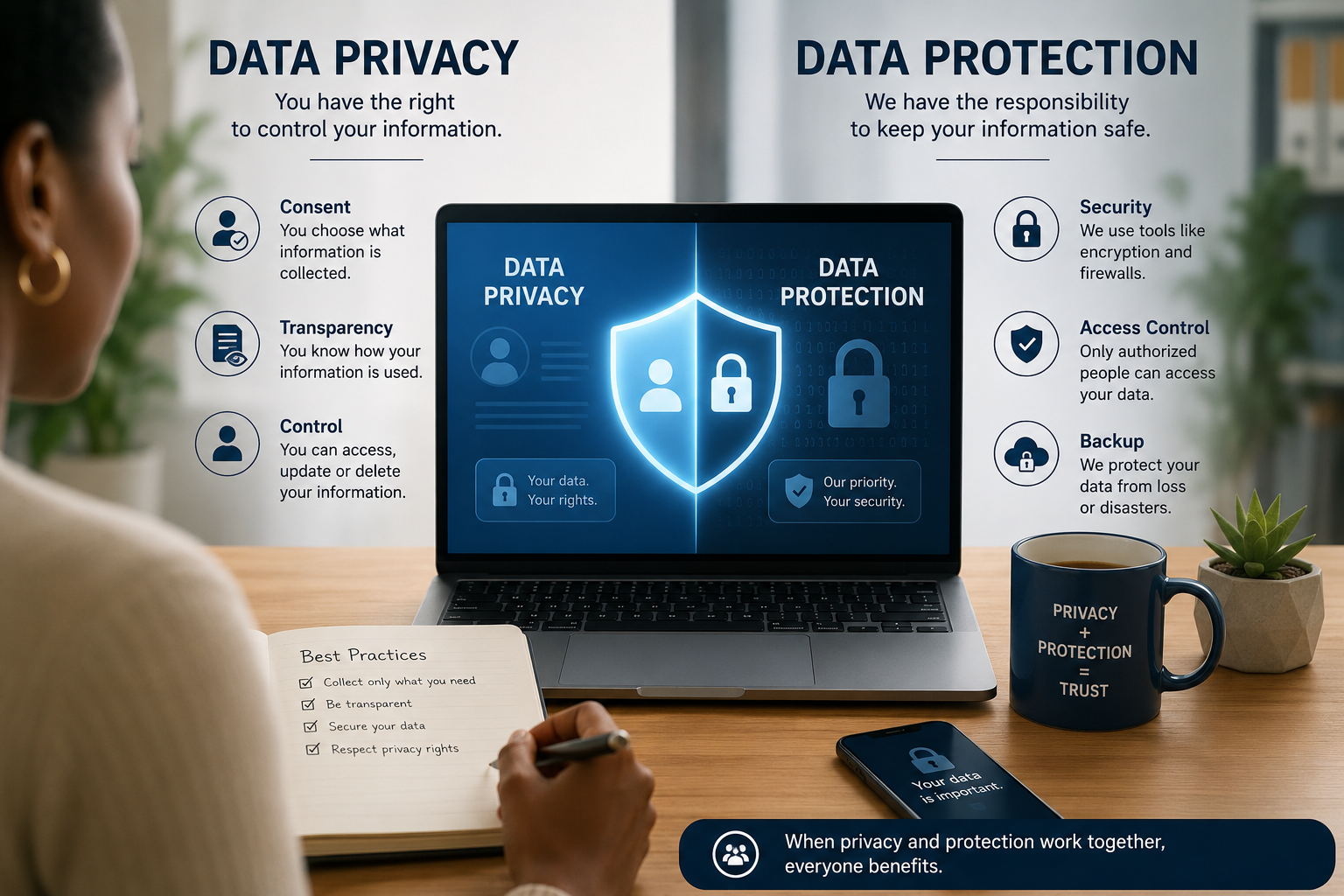
Data privacy focuses on how personal information is collected, used, shared, and managed.
It answers questions such as:
- What information is being collected?
- Why is it being collected?
- Who has access to it?
- How long will it be stored?
- Has the individual given permission?
In simple terms, data privacy is about giving people control over their personal information.
When organizations are transparent about how they use data and respect individuals’ choices, they strengthen trust and demonstrate responsible data practices.
What Is Data Protection?
Data protection focuses on how personal information is secured against unauthorized access, loss, theft, or misuse.
It involves implementing technical and organizational measures to keep information safe.
Examples include:
- Encryption
- Secure passwords
- Multi-Factor Authentication (MFA)
- Firewalls
- Access controls
- Regular backups
- Employee cybersecurity training
While data privacy asks, “Should we collect this information?”, data protection asks, “How do we keep it safe?”
Data Privacy vs. Data Protection: The Key Difference
Although they work together, they serve different purposes.
| Data Privacy | Data Protection |
|---|---|
| Focuses on the responsible use of information | Focuses on securing information |
| Defines who can access data | Prevents unauthorized access |
| Concerned with consent and transparency | Concerned with security controls |
| Addresses legal and ethical responsibilities | Addresses technical and operational safeguards |
Think of it this way:
If personal data were money, privacy determines who is allowed to spend it, while protection ensures it’s stored safely in the bank.
Why Both Matter
Organizations cannot rely on one without the other.
Strong security means little if data is collected without transparency or legitimate purpose. Likewise, excellent privacy policies cannot prevent cybercriminals from stealing poorly protected information.
Businesses that prioritize both privacy and protection benefit from:
- Greater customer trust
- Reduced cyber risks
- Improved regulatory compliance
- Better reputation
- Stronger operational resilience
Privacy and protection are complementary—not competing—responsibilities.
Examples from Everyday Business
Online Shopping
When customers purchase products online, they provide information such as:
- Names
- Addresses
- Phone numbers
- Payment details
Privacy Responsibilities
The business should clearly explain:
- Why the information is needed
- How it will be used
- Whether it will be shared with third parties
Protection Responsibilities
The business should:
- Encrypt payment information
- Restrict access to customer records
- Monitor systems for cyber threats
- Secure databases against unauthorized access
Healthcare
Hospitals and clinics manage highly sensitive medical information.
Privacy ensures patient information is only used for legitimate healthcare purposes.
Protection ensures unauthorized individuals cannot access confidential medical records.
Human Resources
Employers collect employee information for recruitment, payroll, and benefits administration.
Privacy ensures information is collected fairly and only used for appropriate purposes.
Protection ensures personnel records remain confidential and secure.
Common Data Privacy Mistakes
Organizations sometimes expose themselves to unnecessary risks by:
- Collecting more information than necessary
- Failing to explain how information will be used
- Sharing personal data without proper authorization
- Keeping records longer than needed
- Ignoring customer requests regarding their personal information
These issues can damage customer confidence even if no cyberattack occurs.
Common Data Protection Mistakes
Strong privacy policies alone cannot compensate for weak security.
Some common protection failures include:
- Weak passwords
- Outdated software
- Poor access controls
- Lack of employee awareness
- Inadequate system monitoring
- Failure to back up important information
Many data breaches occur because organizations overlook these basic security practices.
Why Data Privacy and Protection Matter for Small Businesses
Many small businesses assume cybercriminals only target large corporations.
In reality, smaller organizations are often attractive targets because they may have fewer security resources.
Customers expect every business—regardless of size—to handle their personal information responsibly.
Investing in good privacy and security practices demonstrates professionalism and helps build long-term customer relationships.
Building a Privacy-First Culture
Technology alone cannot guarantee responsible data management.
Organizations should encourage employees to:
- Handle personal information carefully
- Follow organizational policies
- Report security concerns promptly
- Respect customer confidentiality
- Participate in regular cybersecurity awareness training
Creating a culture of accountability strengthens both privacy and security.
Emerging Trends
As technology evolves, organizations face new challenges.
Key trends include:
- Artificial Intelligence and personal data
- Cloud-based storage
- Internet of Things (IoT) devices
- Remote work environments
- Digital identity management
- Cross-border data sharing
Understanding these developments will become increasingly important for businesses operating in today’s digital economy.
Practical Tips for Individuals
Everyone can contribute to protecting personal information.
Consider these habits:
- Use strong, unique passwords.
- Enable Multi-Factor Authentication.
- Read privacy notices before sharing information.
- Limit what you share on social media.
- Regularly review account security settings.
- Update devices and applications.
- Be cautious when using public Wi-Fi.
Small actions can significantly reduce personal cybersecurity risks.
Practical Takeaways
- Data privacy and data protection are closely related but serve different purposes.
- Privacy focuses on responsible data use.
- Protection focuses on securing information.
- Organizations need both to build customer trust.
- Employee awareness is just as important as technical security.
- Responsible data management supports long-term business success.
Understanding both concepts helps create safer, more trustworthy digital experiences for everyone.
Related AOS Learning Pathways
Strengthen your understanding of responsible data management with these AOS learning opportunities:
- Data Protection Assistant
- Cyber Law
- Cyber Security Awareness Training
- RANSOMWARE UNCOVERED: Cybersecurity Essentials
- Digital Forensics for Cyber Professionals
These learning pathways provide practical knowledge for professionals responsible for managing and protecting information in today’s digital workplace.
Internal Link Suggestions
- Why Every Professional Should Understand Cyber Law
- Understanding Cybercrime: The Most Common Online Crimes and How to Stay Protected
- Data Protection Assistant
- Cyber Security Awareness Training
- AOS Learning Hub
Suggested External References
- National Institute of Standards and Technology (NIST)
- International Association of Privacy Professionals (IAPP)
- International Telecommunication Union (ITU)
- Organisation for Economic Co-operation and Development (OECD)
- Cybersecurity and Infrastructure Security Agency (CISA)
Conclusion
In today’s data-driven world, protecting information is about more than installing security software—it’s about respecting the people behind the data. Organizations that understand the distinction between data privacy and data protection are better equipped to safeguard sensitive information, earn customer confidence, and adapt to evolving legal and technological expectations.
Whether you’re an employee handling customer records, an entrepreneur growing a business, or a professional working with digital systems, understanding these concepts is no longer optional—it’s an essential part of responsible digital citizenship.
Continue Your Learning Journey
As businesses continue to collect and manage increasing amounts of information, professionals with knowledge of data privacy, data protection, and cyber law will be in greater demand. Explore the AOS Learning Hub to develop practical skills that will help you protect information, strengthen compliance, and contribute to a more secure digital future.